
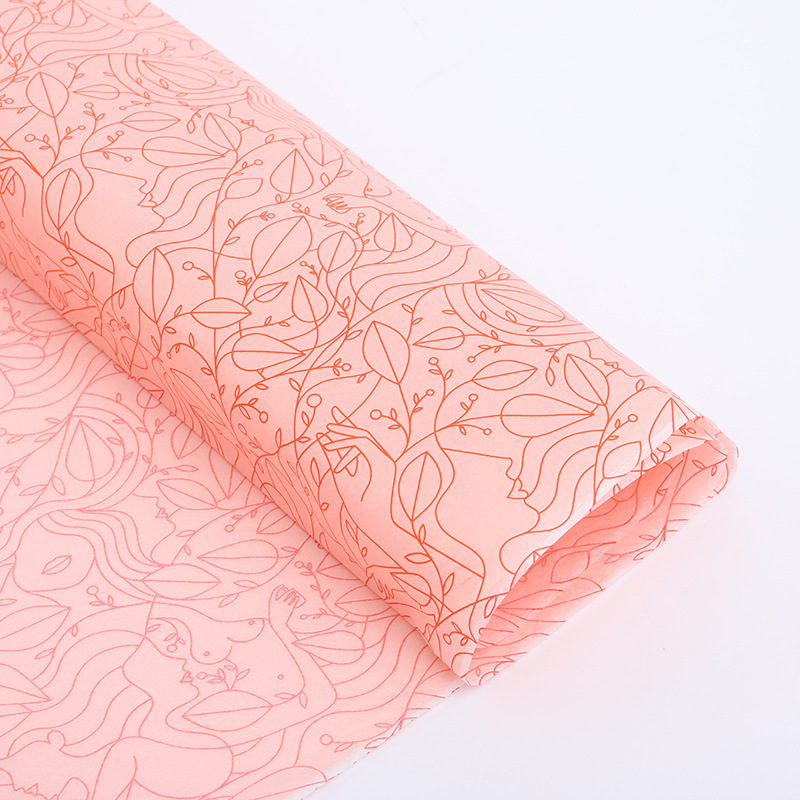
Choose the wrapping style before the sheet size
A tissue sheet can line a box, wrap fully around a garment or form a loose band. Those jobs need different amounts of paper. For a complete wrap, allow for the folded clothing’s width, length and thickness, plus the overlap and end folds. A box liner may only need to cover the bottom and turn up the sides.
At LuxoLabel, we make custom tissue paper in sizes to suit your packing method. A photo of the folded garment and the look you want is a useful starting point. You do not need to know the final sheet dimensions before contacting us.
Tissue paper sheet sizes to compare
These are flat, unfolded sheet dimensions, short side × long side. They are planning examples, not a stock-size list or a promise that one sheet fits every garment in that category.
| Sheet size | Approx. inches | A possible starting use |
|---|---|---|
| 25 × 35 cm | 9.84 × 13.78 in | A small accessory wrap or partial liner |
| 38 × 50 cm | 14.96 × 19.69 in | Compact folded items or children’s clothing |
| 50 × 70 cm | 19.69 × 27.56 in | A folded adult T-shirt or light shirt |
| 60 × 80 cm | 23.62 × 31.50 in | A larger garment or a deeper folded pack |
| 70 × 100 cm | 27.56 × 39.37 in | A bulky clothing bundle or generous box liner |
Keep one unit as the order dimension. The inch values are rounded using NIST’s exact conversion of 25.4 mm per inch. For example, 50 × 70 cm is not exactly the same sheet as 20 × 28 inches.
Which side goes around the garment?
Think of one sheet direction travelling around the folded garment and the other running along it. Turning a rectangular sheet through 90 degrees can change whether the edges overlap. Two sheets with the same area may behave differently if their side lengths differ.
For a rectangular folded pack, the distance around its width and thickness is 2 × (width + thickness). The paper needs more than that distance if the edges are to overlap. This is a simple geometry estimate; soft corners, loose folds and your chosen finish affect the actual wrap.
An example: wrapping a 24 × 30 × 3 cm T-shirt pack
Suppose your folded T-shirt is 24 cm wide, 30 cm long and 3 cm thick. You want the paper edges to overlap by about 4 cm across the top. The starting distance around the pack is 2 × (24 + 3) + 4 = 58 cm.
A 50 × 70 cm sheet gives you a 70 cm direction for that wrap. Place the 50 cm direction along the 30 cm garment length: the remaining 20 cm gives about 10 cm at each end when centered. You can then fold the ends into the finish you prefer.
The extra paper may be useful for a loose wrap, or you may prefer a shorter custom cut after trying the layout. This example does not set a 4 cm overlap for every order. A thicker hoodie needs a different starting point, even if its folded width looks similar.
Sheet size and paper weight are separate choices
Sheet dimensions tell you how much area the paper covers. Grams per square meter, written g/m² or GSM, describe its mass per area. A higher GSM number does not make a small sheet reach farther around the clothing.
We offer tissue weights from 17 to 40 g/m². We can help choose a paper for a soft, light wrap or a firmer presentation. Weight alone does not establish moisture protection, color transfer performance or suitability for a particular garment.
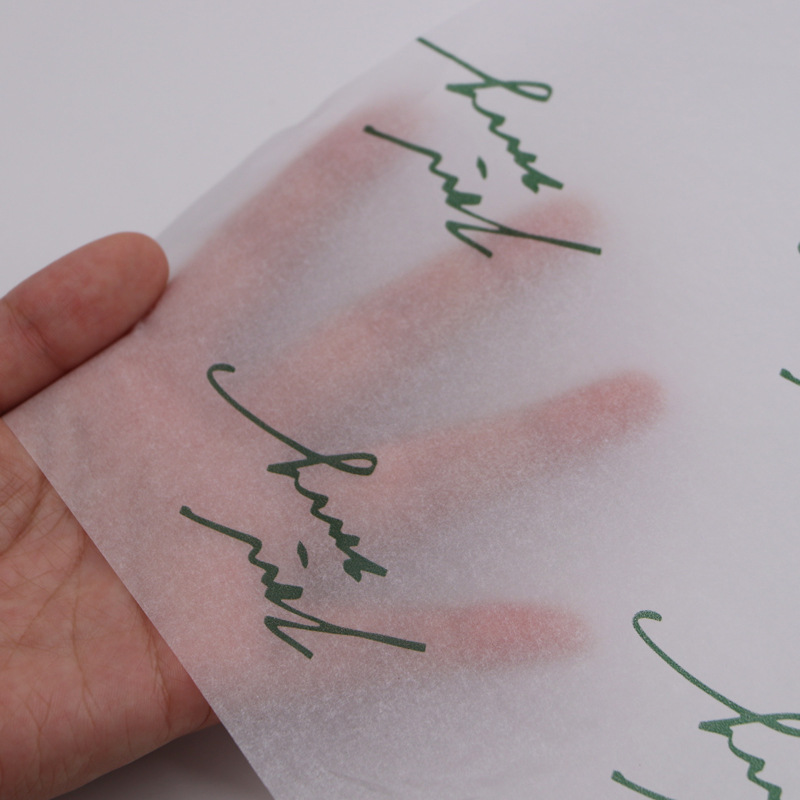
Size the printed design for the finished wrap
A repeat pattern gives you several chances for the logo to appear on the visible face. A single large logo needs more deliberate placement because an overlap, sticker or end fold can hide it. We can lay out the design around the part of the wrap your customer sees first.
Tissue also behaves differently from an opaque hang tag. As noissue explains for printed tissue, the thin paper can let the print show through with a softer appearance. We use a paper sample to judge your artwork on the chosen material instead of relying only on a screen preview.
Leave room for the rest of the packaging
Finish the tissue wrap before choosing the final garment bag. Folded corners and several layers add to the packed size. A sealing sticker can hold the overlap neatly, but it will not make a sheet that is too short cover the garment.
For clothing sets, individual wraps can keep pieces separate; one larger outer sheet gives a different presentation. Send us your packing reference, quantity and logo, and we can help coordinate the sheet, print and closure.
Frequently Asked Questions
Related Guides & Products
Send a photo of the folded garment, your packaging idea and the quantity. We can help choose the sheet and arrange your logo.
Discuss Tissue Paper