
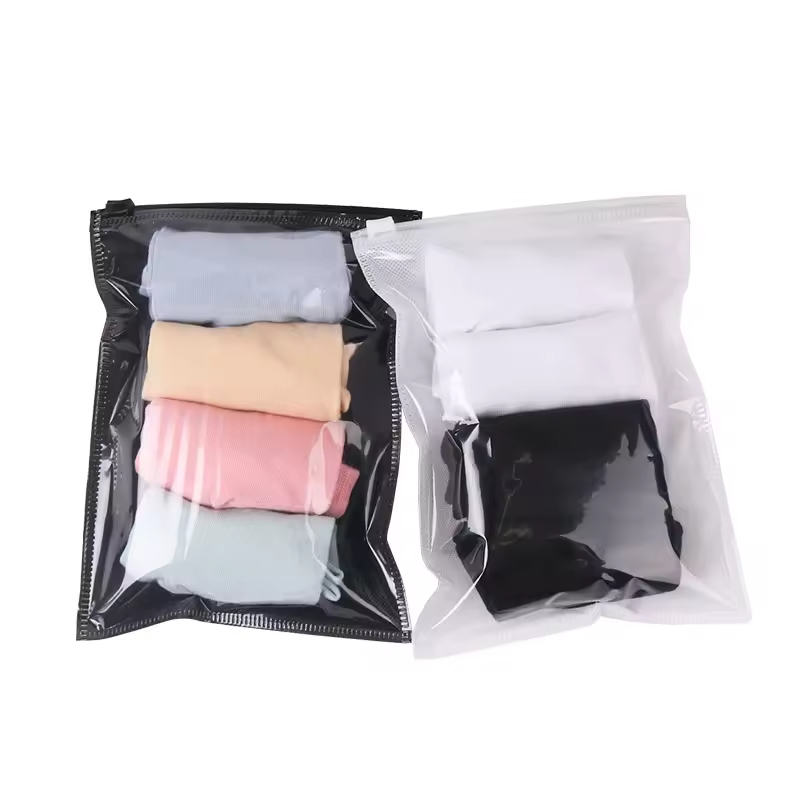
Choose a garment bag from the clothing after folding, including its thickness. The bag needs enough usable space for the pack to slide in and the closure to close comfortably. A T-shirt size such as M or XL does not tell you the bag size: the cut, fabric and folding method all matter.
This guide covers flat bags for folded clothing, including adhesive-flap and zipper styles. Long covers for garments on hangers need a different measurement, explained below.
Garment bag size chart: examples to start with
The following pairings are illustrative sizes to compare with a packed sample, not universal clothing standards or a list of our stock sizes. Bag dimensions mean usable inside width × usable inside length, measured flat, excluding the flap or space above the closure. Inches are rounded from centimeters.
| Example clothing pack | Folded width × length × thickness | Bag size to try, W × L | Approx. bag size in inches |
|---|---|---|---|
| Small children's T-shirt | 18 × 23 × 2 cm | 22 × 28 cm | 8.7 × 11.0 in |
| Lightweight adult T-shirt | 24 × 29 × 2 cm | 28 × 35 cm | 11.0 × 13.8 in |
| Thicker T-shirt or polo | 26 × 32 × 3 cm | 31 × 39 cm | 12.2 × 15.4 in |
| Lightweight hoodie | 30 × 34 × 6 cm | 38 × 44 cm | 15.0 × 17.3 in |
| Thick fleece hoodie | 32 × 38 × 9 cm | 43 × 51 cm | 16.9 × 20.1 in |
| Folded two-piece clothing set | 30 × 35 × 8 cm | 40 × 47 cm | 15.7 × 18.5 in |
Match the second column to your actual pack before using the suggested bag size. A tightly folded hoodie and a loosely folded hoodie can need quite different bags, even when they carry the same garment size label.
Measure the clothing as it will be packed
Fold one finished garment in your usual way. Include tissue paper, a backing card, hang tags and anything else that will go inside. For a set, arrange all the pieces together before measuring.
- Width: measure across the widest part of the folded pack.
- Length: measure from the top of the pack to the bottom.
- Thickness: measure the tallest part of the stack, including a folded hood, waistband or bulky seam.
Let the clothing rest naturally instead of pressing it flat just to get a smaller number. A-Pac's poly bag sizing guide also advises measuring soft goods without stretching them. For mixed sizes, compare the largest and smallest folded packs that will share one bag.
Read the bag dimensions correctly
For this guide, bag width is the finished usable width of the empty bag laid flat, across the opening and between the inside edges of the side seams. It is not the width of the filled package.
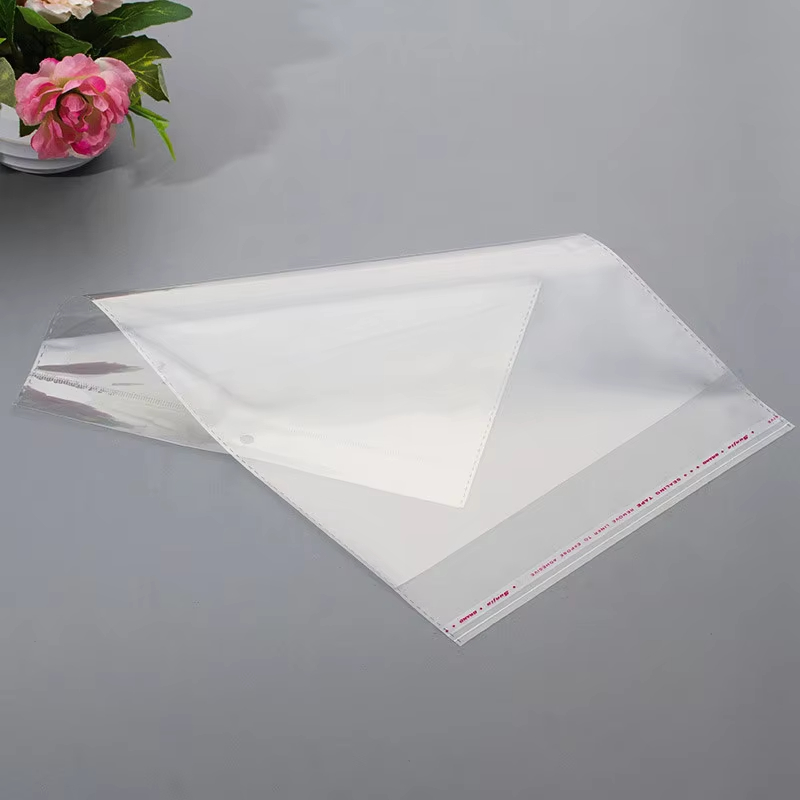
Usable length runs from the inside bottom seam to the point where the bag closes. Keep an adhesive flap, zipper header or display hanging tab separate from that space. This follows the inside-space distinction explained in ClearBags' measurement guidance.
A size written as “30 × 40 + 5 cm” needs an explanation. If the final 5 cm is a flap, it is closure material, not another 5 cm for clothing. A quotation may instead show overall outside dimensions, so the drawing should identify which measurements describe usable space.
Why a hoodie needs more than a wider outline
A flat bag has no fixed box-like depth. As it wraps around a thick garment, some of its flat width and length go around the sides and bottom. Matching the bag to only the garment's top-down outline can leave the opening too tight or the closure under tension.
The hood is often the highest point in a hoodie pack. For a sweatshirt-and-jogger set, stacked waistbands can create a similar lump. Moving those bulky areas or changing the fold may give a neater pack without increasing every bag dimension.
Gusseted bags have extra folded panels and need their own dimension layout. A flat-bag example should not be transferred directly to a gusseted style. Also keep film thickness separate from clothing thickness: 60 microns, for example, means 0.06 mm of film, not the depth available inside a filled bag.
A practical T-shirt sizing example
Imagine a T-shirt folded to 24 × 29 × 2 cm. With its tissue wrap and card, the complete pack measures 25 × 30 × 2.5 cm. Use the second set of measurements to choose the bag.
We would start by comparing bags with 28 × 35 cm and 30 × 38 cm of usable space. The first may give a closer presentation; the second offers more room for loading or a larger garment. These are two sample options to compare, not the result of a formula that guarantees fit.
Slide the wrapped shirt in normally and close the bag. The right option lets the shirt sit neatly, leaves the flap or zipper clear, and does not pull the side seams tight. If the smaller bag only closes after squeezing the clothing, adjust the fold or use the larger option.
Match the bag style to its use
Adhesive-flap bags suit folded packs with a simple fold-over closure. Leave the adhesive strip clear of the garment. Zipper bags offer an opening that can be used again; allow the packed clothing to sit below the zipper rather than crowding it.
Hanging garment covers are sized around the garment on its hanger, including the shoulder width, full hanging length and any bulky areas. A folded T-shirt bag chart will not size a suit cover.
Mailing bags should be chosen around the complete inner pack. A retail garment bag and an outer mailing bag serve different jobs, even if their listed dimensions look similar.
At LuxoLabel, we make custom garment bags with your chosen size, material, printing and closure. A suitable existing bag is also a useful reference when you want to keep the same fit and change the branding.
Frequently Asked Questions
Related Guides & Products
- Custom Garment Bags
- Custom Tissue Paper
- Sample Development
- Tissue Paper Size Guide for Clothing & Gift Packaging
Send a photo of your folded garment or clothing set and your quantity. We’ll help with the bag size, material, closure and printing.
Discuss Your Garment Bags