

What Size Sealing Sticker Works Best?
A sealing sticker must do more than display a logo: it needs to connect the two parts you want to hold together. Our round seals commonly measure 20–50 mm in diameter. A 30 mm round is a useful size to compare on a small tissue fold, while 40 or 50 mm gives a larger design more space.
For a bag flap or box edge, a rectangle may provide a better span. Choose the size on the closed, filled package. An empty bag or an unfolded sheet of tissue does not show the shape the seal will meet during packing.
Sizes to Compare on Different Closures
These are starting points, not guaranteed holding specifications. Round dimensions are diameters; rectangular dimensions are finished width × height with the design upright. The backing liner is excluded.
| Packaging use | Example seal size | Approx. inches | What to look at |
|---|---|---|---|
| Small tissue-paper overlap | 30 mm diameter | 1.18 in | Contact on each side of the top fold |
| Round logo over a wider fold | 40 mm diameter | 1.57 in | Visible logo and enough usable surface |
| Larger message seal | 50 mm diameter | 1.97 in | Room for wording around the center |
| Narrow bag flap | 40 × 20 mm | 1.57 × 0.79 in | How the longer side crosses the join |
| Longer closure span | 60 × 25 mm | 2.36 × 0.98 in | Space across an edge plus contact at both ends |
The rectangle can be turned to suit the closure. Describe which dimension crosses the join so the artwork is oriented correctly when the sticker is applied.
Measure Where the Seal Actually Sits
Fold the tissue around the garment, close the bag flap or shut the box. Look at the path the sticker will follow from one attachment area to the other. A raised edge or curved corner may use part of the sticker length before it reaches the second surface.
A paper strip laid along that path makes the size easier to judge. Avery’s label measuring guide describes using a paper cutout on the actual product and measuring it flat afterward. For a seal, mark the closure line on that cutout too.
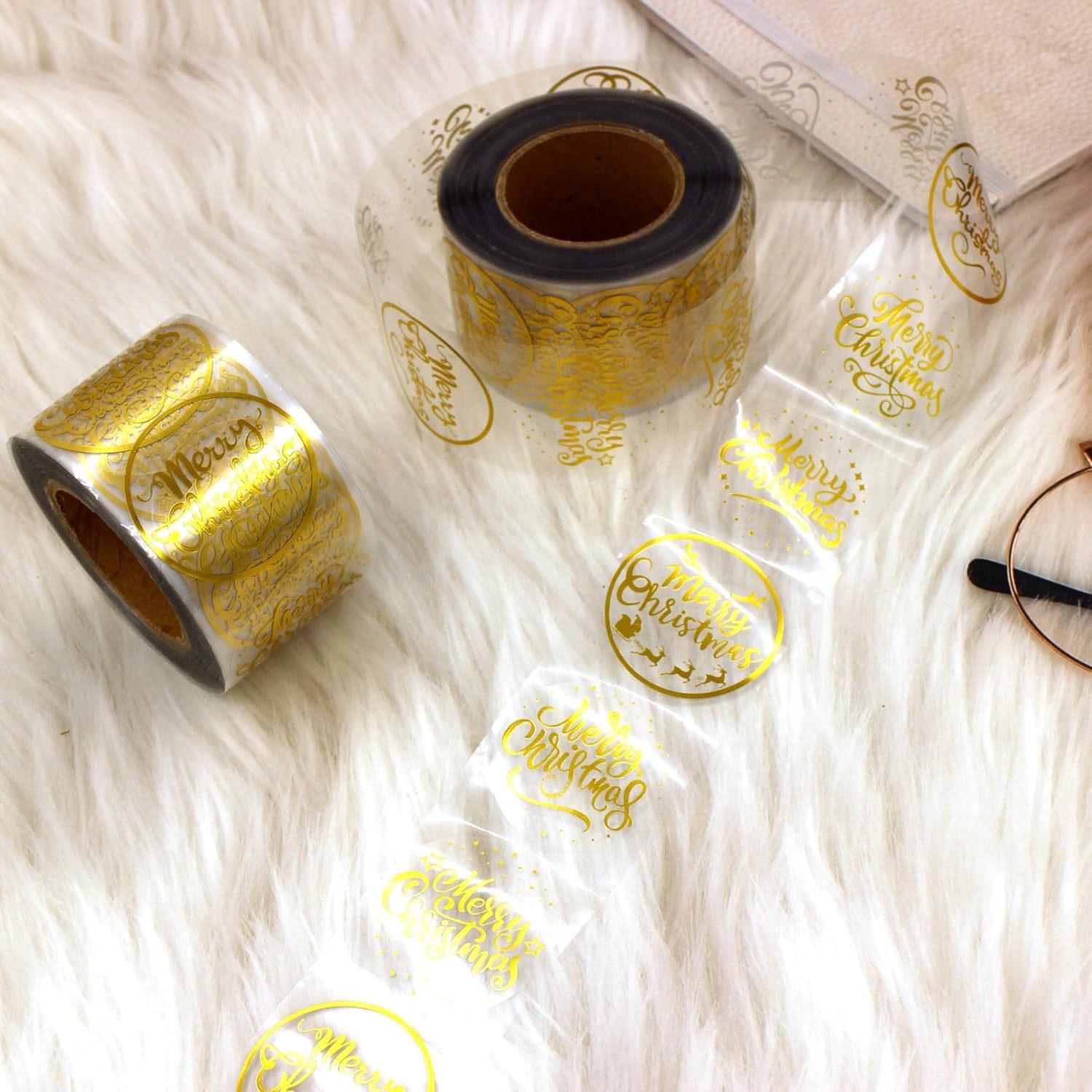
Example: A Seal Across a Flat Join
Suppose a flat package has an 8 mm-wide join area where you do not expect reliable contact. For this example, you choose 15 mm of contact on each side. The required span is 15 + 8 + 15 = 38 mm.
A 40 × 20 mm rectangle, with its 40 mm side across that join, leaves (40 − 8) ÷ 2 = 16 mm on each side when centered. That makes it a candidate for a sample on this particular package.
The 15 mm contact choice is illustrative, not an adhesive standard. This simple calculation assumes flat surfaces and a straight crossing. A box corner needs its actual travel distance, and a curved round seal has a different contact shape from a rectangle. The material and adhesive still determine how the seal holds.
Keep the Message Away from the Bend
A large logo centered on a flat tissue fold can look clear. The same placement over a sharp box edge may split the wordmark between two faces. Decide which surface should show the main message and arrange the artwork around the bend.
A simple symbol can work on a small round seal. A longer thank-you message often benefits from a wider face. Clear film also lets the package color show through, so choose the print color with the actual tissue, bag or box in view.
Choose How the Seal Should Open
Some seals should peel away; others should remain attached or tear during opening. We offer coated paper, synthetic paper, PVC and destructible-paper options, with removable or stronger-tack adhesive choices according to the project.
A decorative tissue seal is not automatically a shipping-carton closure. Nor does a destructible-paper seal make a package tamper-proof. We can make paper that tears when removed, but the complete result depends on the seal and packaging together. A sample is useful for choosing the opening style you want.
Make the Seal Easy to Apply Consistently
If staff apply seals by hand, a clear placement point helps them put the design in the same position on each package. For a roll applicator, the supply format needs to match the equipment as well as the finished sticker dimensions.
We supply rolls or sheets and can coordinate the seal design with garment bags and tissue paper. Send a photo of the closed package, the logo or message and your quantity. We can help select a size that gives the design enough room and reaches the surfaces you need to join.
Frequently Asked Questions
Related Guides & Products
- Custom Sealing Stickers
- Custom Tissue Paper
- Sticker Size Guide
- Tissue Paper Size Guide for Clothing & Gift Packaging
Show us the closed bag, tissue fold or box and your artwork. We’ll help with the seal size, material, adhesive and quote.
Discuss Sealing Stickers