
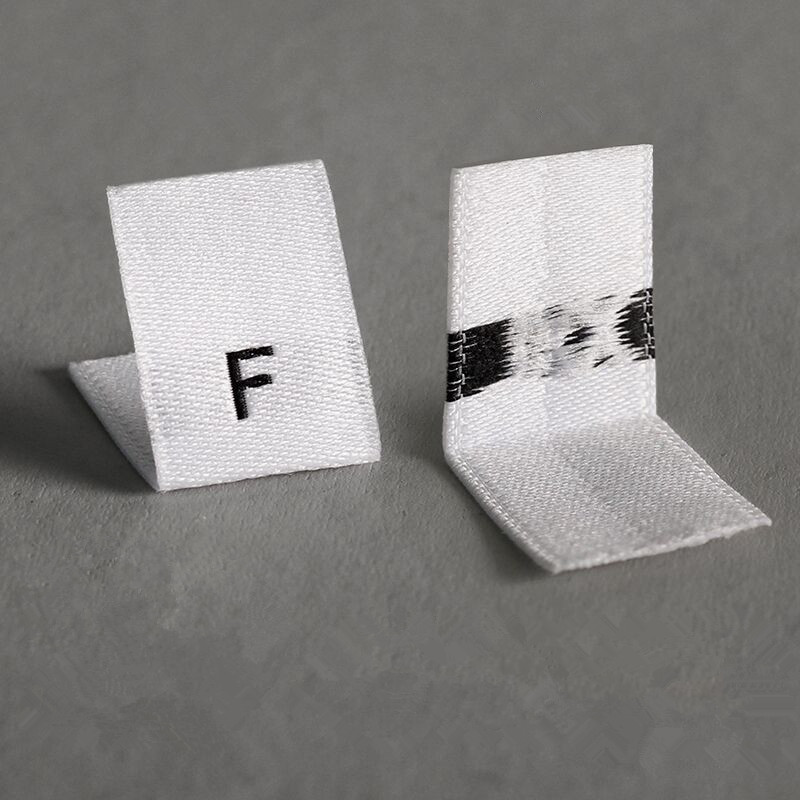
How big should a clothing size label be?
A 15 × 15 mm finished face can be a useful starting point for a separate size tab. A 20 × 15 mm face gives a longer marking such as XXL more width, while 20 × 25 mm allows a compact two-line layout. These are examples for planning, not fixed label sizes.
The size of the tab is different from the clothing size printed on it. We make custom size labels using your letter or numeric sequence. The aim is a mark that is easy to find without making the small tab dominate the brand label.
Small label dimensions in mm and inches
The fabric-tab examples below use finished face width × height after folding, if any, but before sewing. The face includes any area that will enter the seam. Hidden return folds are additional. The table does not describe the dimensions of a heat-transfer carrier.
| Finished face, mm | Approx. inches | Possible marking |
|---|---|---|
| 10 × 15 | 0.39 × 0.59 | Compact single letter or digit |
| 15 × 15 | 0.59 × 0.59 | Square letter-size tab |
| 15 × 20 | 0.59 × 0.79 | Taller tab with sewing space |
| 20 × 15 | 0.79 × 0.59 | Wider marking such as XXL |
| 20 × 20 | 0.79 × 0.79 | Numeric range or roomier lettering |
| 20 × 25 | 0.79 × 0.98 | Short two-line size layout |
Inch values are rounded from NIST's exact conversion of 25.4 mm per inch. The font and construction decide which example suits your marking.
Design around the longest marking in the range
A single S can fit comfortably where XXXL looks squeezed. A numeric range may need a dash, slash or second line. Start with the longest actual marking, then use that same basic layout for the shorter sizes.
For example, suppose the chosen XXL artwork is 11 mm wide. Leaving 3 mm clear at each side calls for a face at least 17 mm wide: 11 + 3 + 3. An 18 mm-wide design would leave a little more room. These are chosen layout margins, not minimum production limits.
Keeping one tab size across a range makes the set look consistent. It also avoids changing the sewing position just because the garment marking has one extra character.
Choose the position with the main label
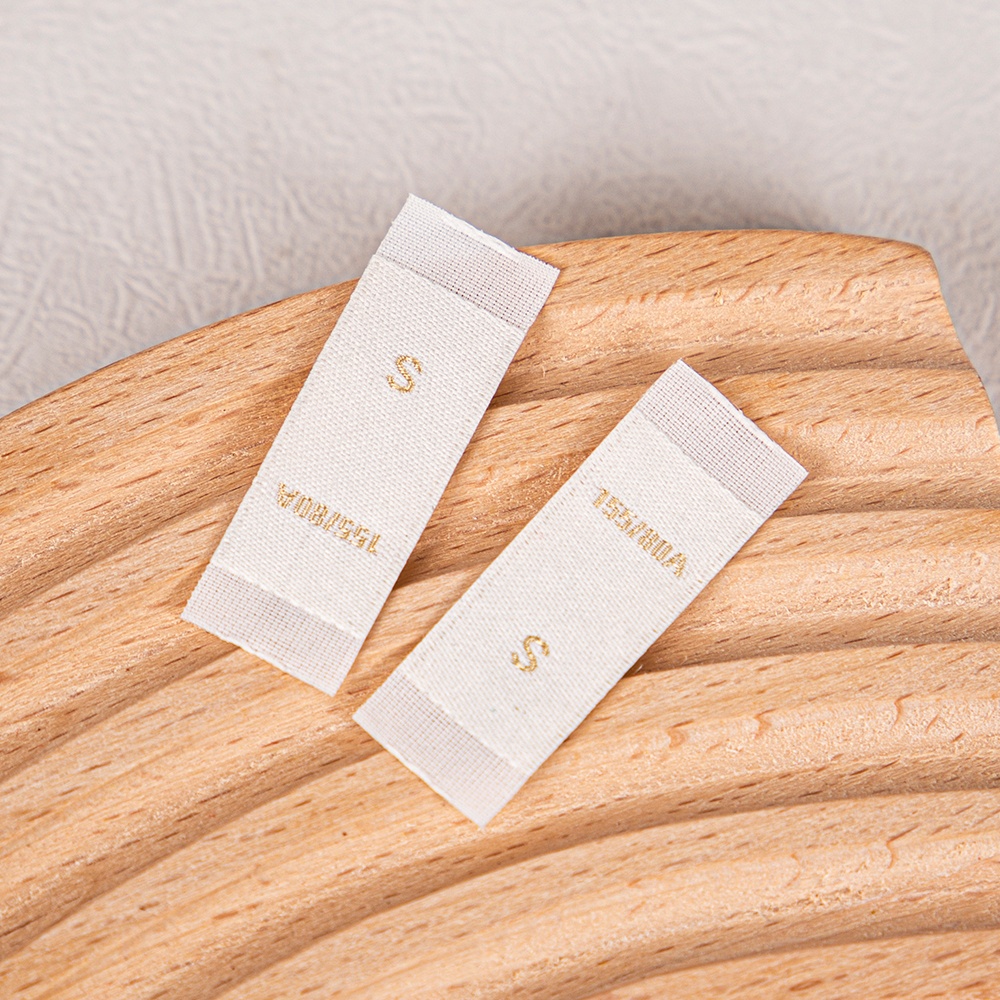
A size tab can sit beside or below the brand label at the neckline. Leave it exposed enough to read rather than burying the marking under the larger label. If the brand label is especially narrow, a tab below it may create a cleaner arrangement than a side-by-side pair.
A side-seam size label can share a location with the care information. The size should still be easy to spot without unfolding several pages. We can also include the size in a larger printed label when a separate tab would add unnecessary layers.
A folded tab needs more length than its face
A center fold brings two raw ends together for sewing into a seam, as illustrated in the Dutch Label Shop fold guide. A small finished tab therefore uses a longer unfolded strip.
Take a 15 × 18 mm closed face with a simple fold halfway along the length. The unfolded piece is 15 × 36 mm. If the raw ends enter the seam by 4 mm, the exposed face is 15 × 14 mm: 18 − 4 = 14 mm. The size marking belongs in that exposed area.
This example has no extra end folds. Different seam depths or finishing methods change the drawing, so we show the face, fold and attachment area separately.
Woven, printed or directly transferred?
Woven size labels form the marking in yarn. Printed labels put the marking onto the label fabric. We offer both, with the material and edge finish chosen for the design. Neither process has one universal smallest label size that suits every character.
A heat-transfer size mark goes directly onto the garment without a fabric tab. For that option, give the width and height of the applied artwork separately from the carrier size. It needs no sewing allowance, but the transfer and application still need to suit the fabric.
Keep the range clear for production
Use your own approved size names, including punctuation and spacing. The same letter can mean different garment measurements across brands, so we do not convert one brand's size range into another.
We can supply different quantities for each marking and arrange separate packing. There is no fixed minimum order. Sharing the complete range at the start helps us keep the label dimensions, lettering style and colors consistent.
Frequently Asked Questions
Related Guides & Products
- Custom Size Labels
- Care Label Size Guide
- Custom Heat Transfer Labels
- Size Sticker Size Guide: Rounds, Rectangles & Clothing Packs
Send your size list, quantities and a photo of the label position. We will help keep the markings clear and the tabs in proportion.
Discuss Size Labels