
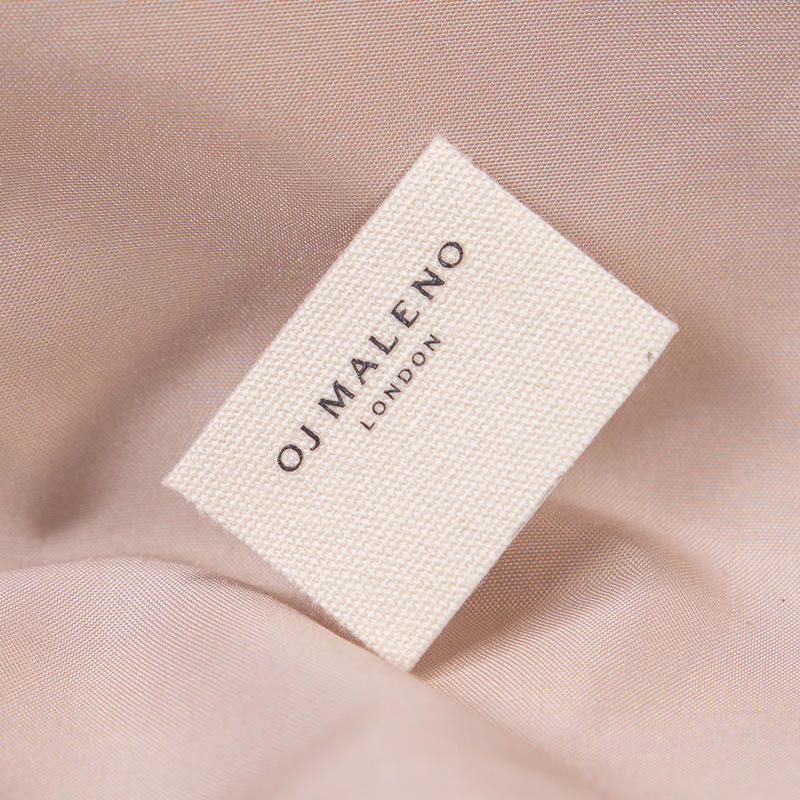
What size should a printed clothing label be?
A 50 × 20 mm finished face is a useful starting point for a short printed brand name. Try 60 × 30 mm when the design includes a second line, or 30 × 50 mm for a portrait layout with a small logo above the wording. These are design examples, not standard or stocked sizes.
For custom printed labels, the size works together with the fabric surface, artwork and sewing position. A wider label may suit a long name; a taller label can give a small illustration and subtitle their own space. We can help turn either approach into a finished label.
Printed label size examples in mm and inches
The table describes the finished label face, width × height, after any folds but before sewing. It includes space reserved on that face for stitching. Hidden fold-under ends are extra. For a straight-cut label with no folds, the finished face and cut size are the same.
| Finished face, mm | Approx. inches | Possible layout |
|---|---|---|
| 30 × 15 | 1.18 × 0.59 | Short name or small wordmark |
| 40 × 20 | 1.57 × 0.79 | Compact neck or accessory label |
| 50 × 20 | 1.97 × 0.79 | Wide brand name |
| 60 × 30 | 2.36 × 1.18 | Logo with a second line |
| 30 × 50 | 1.18 × 1.97 | Portrait logo and short wording |
| 70 × 30 | 2.76 × 1.18 | Long name or decorative layout |
Conversions use NIST's exact 25.4 mm per inch, rounded here to two decimals. Keep one controlling unit on the production artwork.
Choose the fabric surface with the artwork
We print on satin, polyester tape, cotton tape and other suitable label materials. Satin gives a smooth-looking background; cotton gives the design a visible textile character. The same narrow lettering can look different on those surfaces, so the material belongs in the size decision.
A simple one-color logo often leaves more freedom to use a compact face. A detailed drawing, several colors or a small subtitle may benefit from extra width or height. We also offer selected foil details on suitable materials; a larger face can give that highlight room without crowding the main name.
Allow for the parts that fold behind the label
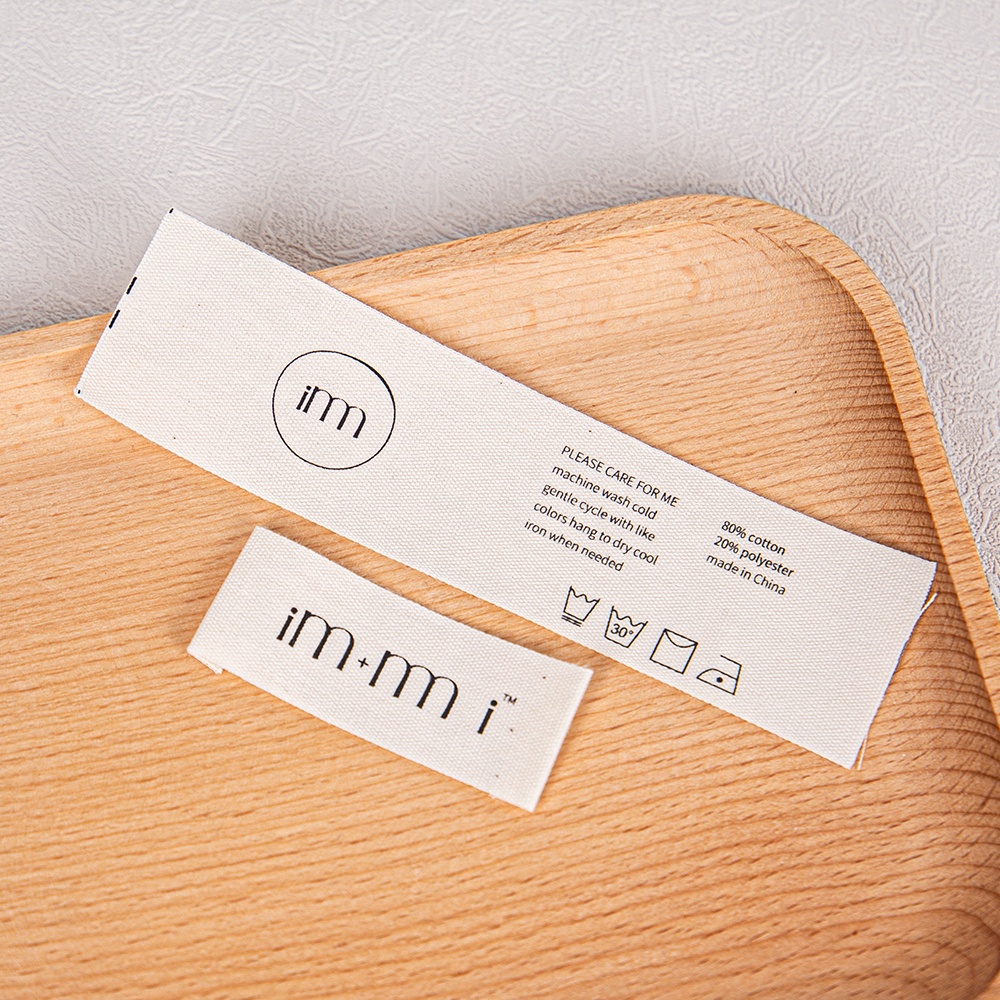
End folds turn the two ends behind the face; a center fold divides the label into two sides. The Dutch Label Shop fold guide illustrates these constructions. The fold type changes the unfolded dimensions, even when the visible design looks similar.
On a label attached across the neck, folded ends can sit behind the stitched sides. On a tab inserted into a seam, part of the folded face will disappear inside that seam. Keep the logo out of the attachment area. The allowance depends on the chosen construction and your sewing method.
A 60 × 25 mm label with folded ends
Imagine a printed neck label with a 60 × 25 mm finished face. For this example, each end folds under by 5 mm. The unfolded piece is 70 × 25 mm: 60 + 5 + 5 = 70 mm wide.
If the layout also reserves a 4 mm stitching zone inside each side of the finished face, the central artwork width becomes 52 mm: 60 − 4 − 4. Those stitching zones are already within the 60 mm face; they are not added again to the cut size. Both allowances are illustrative choices, not a factory-wide rule.
Give the smallest line enough space
Size the label around the line that is hardest to read, not only the large logo. A brand name can fit comfortably while a website or subtitle beneath it becomes cramped. Removing an unnecessary line may work better than making the entire label much larger.
There is no single font size that guarantees clarity across every typeface, ink and fabric. We can show the proposed artwork at actual size and make a sample on the selected material. That makes the decision about the finished label, rather than a highly enlarged screen preview.
Keep the label in proportion to its position
A wide label can look balanced inside a jacket neck but dominate a small accessory. A portrait label may fit neatly into a side seam while turning awkwardly at the neckline. The placement also decides which direction customers will read the print.
When several garments share the same branding, keep the logo proportions consistent and adapt the surrounding space where needed. A smaller label does not need to squeeze in every detail from a larger one. For longer washing or composition information, a separate care label can keep the main printed label simple.
Frequently Asked Questions
Related Guides & Products
- Custom Printed Labels
- Clothing Label Size Guide
- Custom Care Labels
- Woven Label Size Guide: Logo Proportions, Borders & Folds
Send your logo, a garment photo and the quantity you need. We can help with the fabric, size and folds.
Discuss Printed Labels