
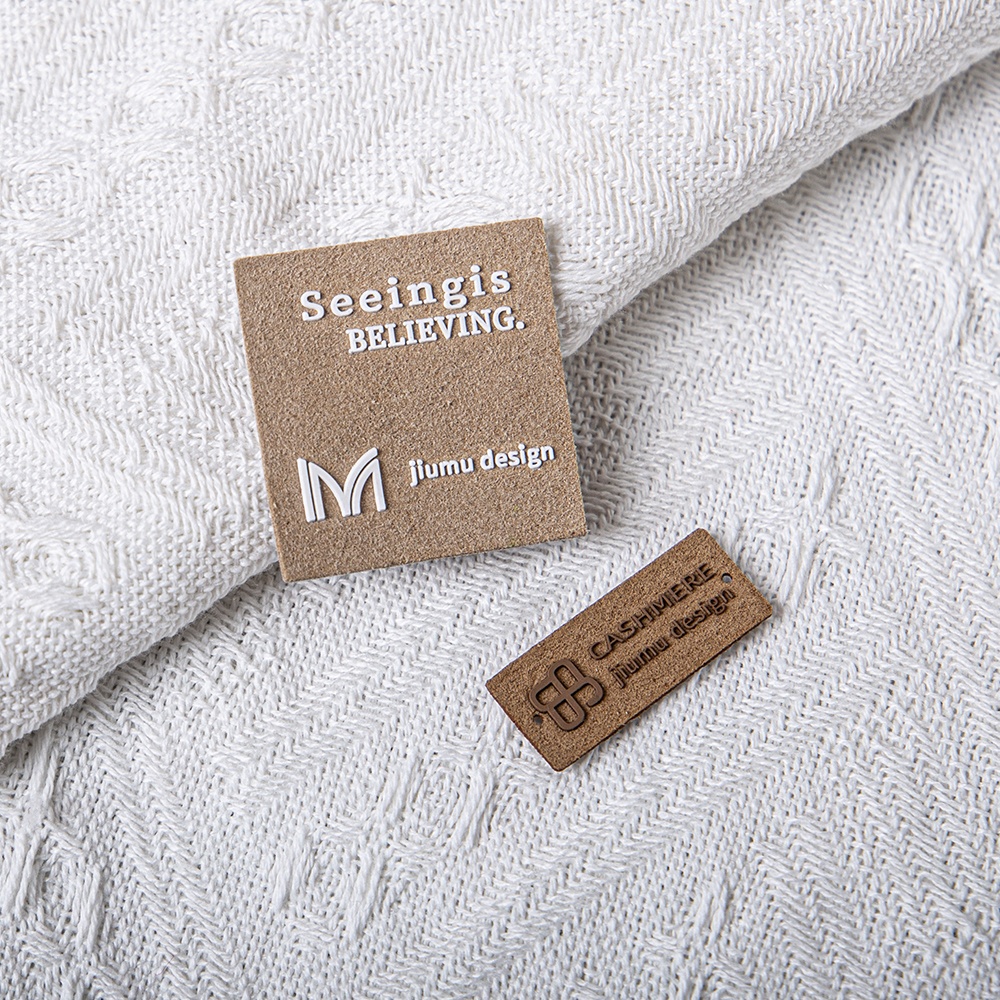
What size should a brand label be?
A 50 × 20 mm label face is one starting point for a wide name inside a neckline. A 25 × 25 mm face can suit a compact emblem, while a 60 × 40 mm patch gives a larger exterior logo more presence. The best size depends on where the label sits and how much attention you want it to draw.
We make custom brand labels in woven and printed fabric, leather, silicone and PVC. A brand label is a use, not one single material or shape. These examples help you choose proportions; they are not standard sizes or a promise that every design fits each format.
Brand label dimensions by layout
Dimensions are finished width × height. For textile labels, this means the face after any folds and before sewing. For a flat leather or molded patch, it means the outer finished outline. Any attachment area within that outline reduces the space available for the logo.
| Finished size, mm | Approx. inches | Possible placement or design |
|---|---|---|
| 25 × 25 | 0.98 × 0.98 | Small square emblem |
| 40 × 15 | 1.57 × 0.59 | Narrow wordmark or side detail |
| 50 × 20 | 1.97 × 0.79 | Wide neck label |
| 50 × 30 | 1.97 × 1.18 | Compact sleeve or accessory patch |
| 60 × 30 | 2.36 × 1.18 | Wordmark with open space around it |
| 60 × 40 | 2.36 × 1.57 | Larger jacket, bag or waistband detail |
Inches are approximate, using NIST's exact factor of 25.4 mm per inch. A photo of the intended position helps put these dimensions in context.
Let the logo shape guide the outline
A long wordmark naturally leads toward a wide label. A compact monogram may sit more comfortably in a square or round outline. Trying to fill the same rectangle with both can make one design look cramped and the other look lost.
Keep the logo's proportions as you explore sizes. Stretching it wider just to fill the label changes the artwork. Instead, change the surrounding space or use a different arrangement, such as placing a symbol above the name. We can help prepare those options from your original logo.
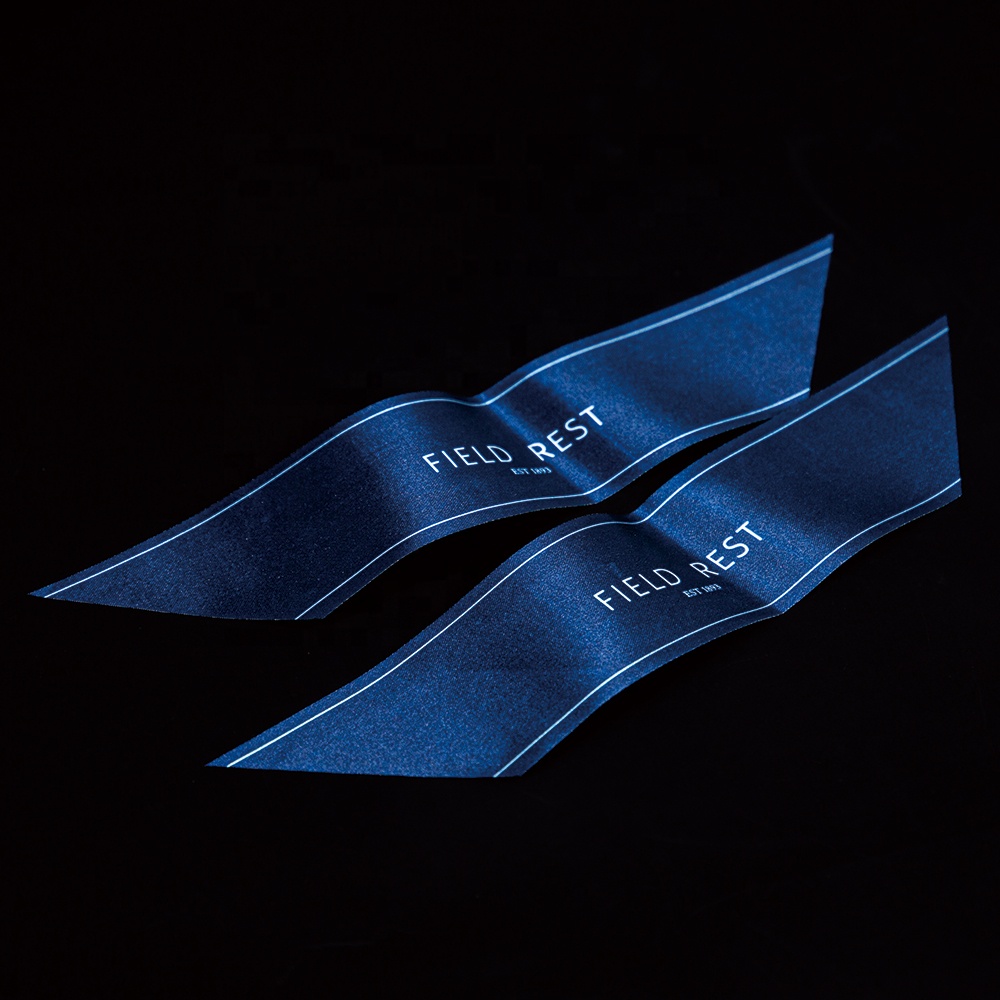
Fit a 3:1 wordmark inside a 60 × 30 mm label
Imagine a wordmark that is three times as wide as it is high. On a 60 × 30 mm finished label, the proposed design leaves 6 mm on both sides. That gives the wordmark 48 mm of width: 60 − 6 − 6 = 48 mm.
Keeping its 3:1 proportions makes the wordmark 16 mm high: 48 ÷ 3 = 16 mm. Centering it leaves 7 mm above and below: (30 − 16) ÷ 2 = 7 mm. Those spaces can keep the design open and accommodate the chosen border or attachment layout.
The 6 mm and 7 mm spaces belong to this design example. They are not universal sewing or molding limits. If the planned border takes more room, the logo area needs to change with it.
The same dimensions can feel different in another material
A printed fabric label presents the artwork on a textile surface. Woven yarn adds texture, leather allows pressed detail, and molded silicone or PVC can give the logo raised areas. We can develop those finishes without assuming that one outline will look identical in every material.
A broad exterior patch can become a deliberate feature on a jacket or bag. A similar-sized patch on a light garment may draw more attention than intended. A smaller, simpler emblem may fit that product better while keeping the same brand identity.
Keep attachment space separate from the logo
Textile labels may need folded ends or seam insertion. End folds turn material behind the face, as shown in the Dutch Label Shop fold guide. Those hidden sections affect the unfolded cut size.
A leather or molded label may use a visible stitched border or another agreed attachment. The stitch line and logo should have distinct space in the drawing. An adhesive backing does not by itself establish suitability for every garment or washing method; we help choose the attachment for the actual product.
Build a small family of coordinated sizes
A clothing collection does not need to force one label onto every position. A wide neck label, compact hem detail and larger jacket patch can share colors and logo proportions while using different dimensions.
Keep the main mark recognizable across the set and simplify secondary text on the smaller versions. We can help choose the material and finish for each position. If a design needs a mold or other tooling, that fee is quoted separately; there is no fixed minimum order.
Frequently Asked Questions
Related Guides & Products
- Custom Brand Labels
- Custom Leather Labels
- Printed Label Size Guide
- Clothing Label Size Guide: Woven, Printed & Care Labels
Send your logo, a product photo and the quantity you need. We will help choose a label size, material and finish.
Develop Your Brand Label